Published on 8/1/2026
QR Code or Short Link: When to Use Which
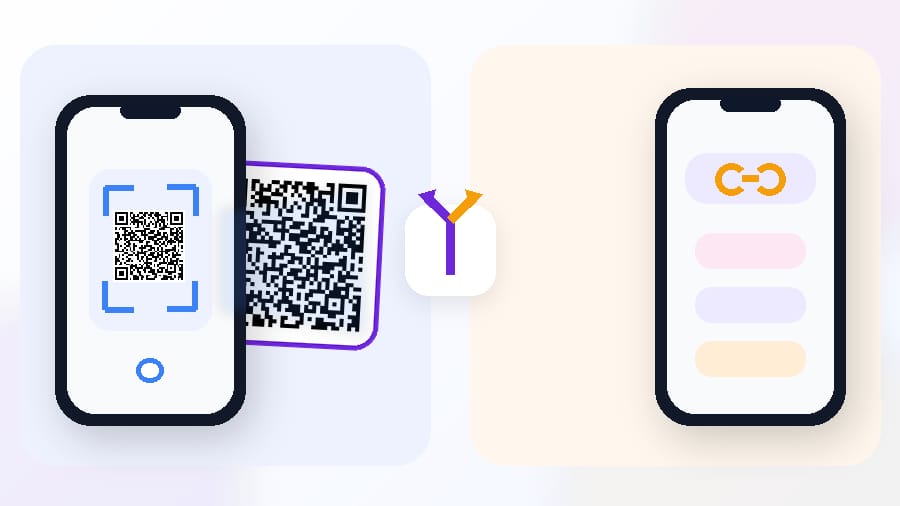
These are not competitors. They are two doors into the same room, and the choice is decided by one question: can the reader tap?
If the thing they are looking at is a screen, they can tap — so a link. If it is a printed sheet, a wall, a bottle or a van, they cannot — so a code. Everything else is detail.
Use a QR code when
- The surface is physical. Menus, packaging, posters, signage, tickets, business cards, vehicle livery. There is no tap available, and a printed address has to be typed.
- The destination is long or ugly. Nobody types a URL with a campaign parameter. The code does not care how long it is.
- Distance is involved. A poster at three metres, a board across a car park. A phone camera reads at a distance no human eye can read small print at.
- You want a count of physical exposure. Which board, which flyer, which shelf — one code per placement and the numbers separate.
Use a short link when
- You are already on a screen. Email, a chat message, a social post, a PDF, a slide deck. A code on a screen asks the reader to hold up a second phone, which is absurd and yet common.
- The channel is spoken or typed. Radio, a podcast, a phone call, a printed line someone will read aloud. A short link can be said out loud; a code cannot.
- You want it clickable. Nothing beats a tap that goes straight through.
The mistake that shows up most
A QR code in an email. The reader is on the device that would do the scanning. They now need a second device, or the trick of taking a screenshot and scanning it from the photo library, which no ordinary person will do.
Same for a code in a mobile-first PDF, a code on a website, and a code in a chat message. If the eye that sees it is looking at a screen, give it a link.
The part where you do not have to choose
A dynamic code is a short link. The pattern encodes a short URL, and the scan goes through that URL before it lands anywhere. So one destination can be published both ways: the code on the printed material and the same short link in the email — both editable later, both counted.
Two practical notes. Print the plain address in small type under the code: it costs a line and covers the phone with a broken camera, the person who prefers typing, and the reader who does not trust an unexplained square. And if you run the link on your own domain, the address under the code reads as yours, which is worth more than the character count you saved.
What each one tells you
Analytics are the same either way, because the scan and the click pass through the same redirect: scans over time, device, operating system, browser, referrer, and unique visitors from a hashed IP.
The difference is in what you can conclude. A referrer tells you which website a click came from; a printed code has no referrer, so what separates one poster from another is using a different code for each. And in neither case is there location data — there is no geolocation in the analytics at all — so "which city scanned this" is not a question either format can answer.
Trust, in both directions
A short link hides its destination behind a domain, which is why link shorteners are used in phishing. A QR code hides it behind a pattern, which is worse: a link can be read before it is tapped, and a code cannot be read at all.
What helps is the same for both: a domain the reader recognises. "enqre.com/…" under a code on your own menu is a claim someone can check; a random shortener domain is not. If your audience is cautious — banking, healthcare, anything involving payment — put the visible address next to the code and use your own domain.
Deciding in ten seconds
- Printed, painted, or on a screen the reader cannot tap → code.
- On the reader's own screen → link.
- Said out loud → link, and keep it short enough to remember.
- Both channels for one campaign → one dynamic code, whose link you also paste.
Quick answers
- Is a QR code better than a short link? Neither is better. A code is for physical surfaces, a link for digital ones.
- Should I put a QR code in an email? No. The reader is holding the scanner. Use the link.
- Can one destination have both? Yes — a dynamic code already is a short link, so publish the code in print and the link on screen.
- Do I still need the URL printed under the code? It is worth the line. It covers broken cameras, typers, and readers who do not trust a bare square.
- Which gives better analytics? The same, since both go through one redirect. Print needs a separate code per placement to be comparable.
- Which is safer? A link, marginally — it can be read before tapping. Either way, use a domain people recognise.