GS1 Sunrise 2027 : ce que le passage aux codes 2D change pour vos produits
En bref : GS1 Sunrise 2027 est l'initiative mondiale du commerce pour rendre les codes 2D — QR codes avec GS1 Digital Link, ou GS1 DataMatrix — lisibles en caisse d'ici fin 2027, aux côtés du code-barres à rayures. Le rectangle qui identifie les produits depuis les années 1970 ne porte qu'un numéro ; un code 2D porte ce même numéro plus un lot, une date de péremption et une adresse web. C'est une migration sectorielle, pas une loi — mais le moment où le QR code cesse d'être un ajout marketing pour devenir l'identifiant principal du produit.
Qu'est-ce que GS1 Sunrise 2027 ?
GS1 est l'organisation derrière le code-barres — elle gère le GTIN, le numéro de produit mondial encodé dans le code UPC/EAN à rayures présent sur presque tout ce que vous achetez. GS1 Sunrise 2027 est un effort coordonné des enseignes, des marques et des fournisseurs de technologie pour que, d'ici fin 2027, les systèmes de caisse du monde entier puissent lire les codes 2D en caisse — et pas seulement le code linéaire d'aujourd'hui.
Un « code 2D » désigne ici soit un QR code utilisant GS1 Digital Link, pour que le même carré serve en caisse et lorsqu'un client le scanne avec son téléphone, soit un GS1 DataMatrix, le carré compact déjà courant en santé et en frais. L'idée est la même : remplacer un symbole qui ne porte qu'un numéro par un symbole qui porte un numéro, des données structurées et un lien web.
Pourquoi le commerce quitte le code-barres 1D
Le code-barres linéaire fait bien une chose depuis cinquante ans : il dit ce qu'est le produit (le GTIN) et rien d'autre. Tout le reste qu'une chaîne d'approvisionnement moderne veut savoir — quel lot, quelle date de péremption, quel numéro de série, où en lire plus — doit vivre dans un système séparé ou un second symbole. Un code 2D condense tout cela en une seule marque :
- Le GTIN, exactement comme aujourd'hui, pour que la caisse connaisse le produit et le prix.
- Le lot, pour qu'un rappel cible la série concernée au lieu de toute la gamme.
- La date de péremption, pour qu'un magasin bloque la vente d'un produit périmé et démarque automatiquement ceux qui expirent bientôt.
- Le numéro de série, pour l'authentification et la garantie.
- Un lien web (GS1 Digital Link), pour que le scan du caissier soit le même que celui du client — ingrédients, notices, provenance ou un passeport numérique de produit.
Moins de gaspillage, des rappels plus rapides, et un seul code au service du magasin, de la chaîne et du consommateur — voilà l'argument du changement.
Ce que porte réellement un code 2D
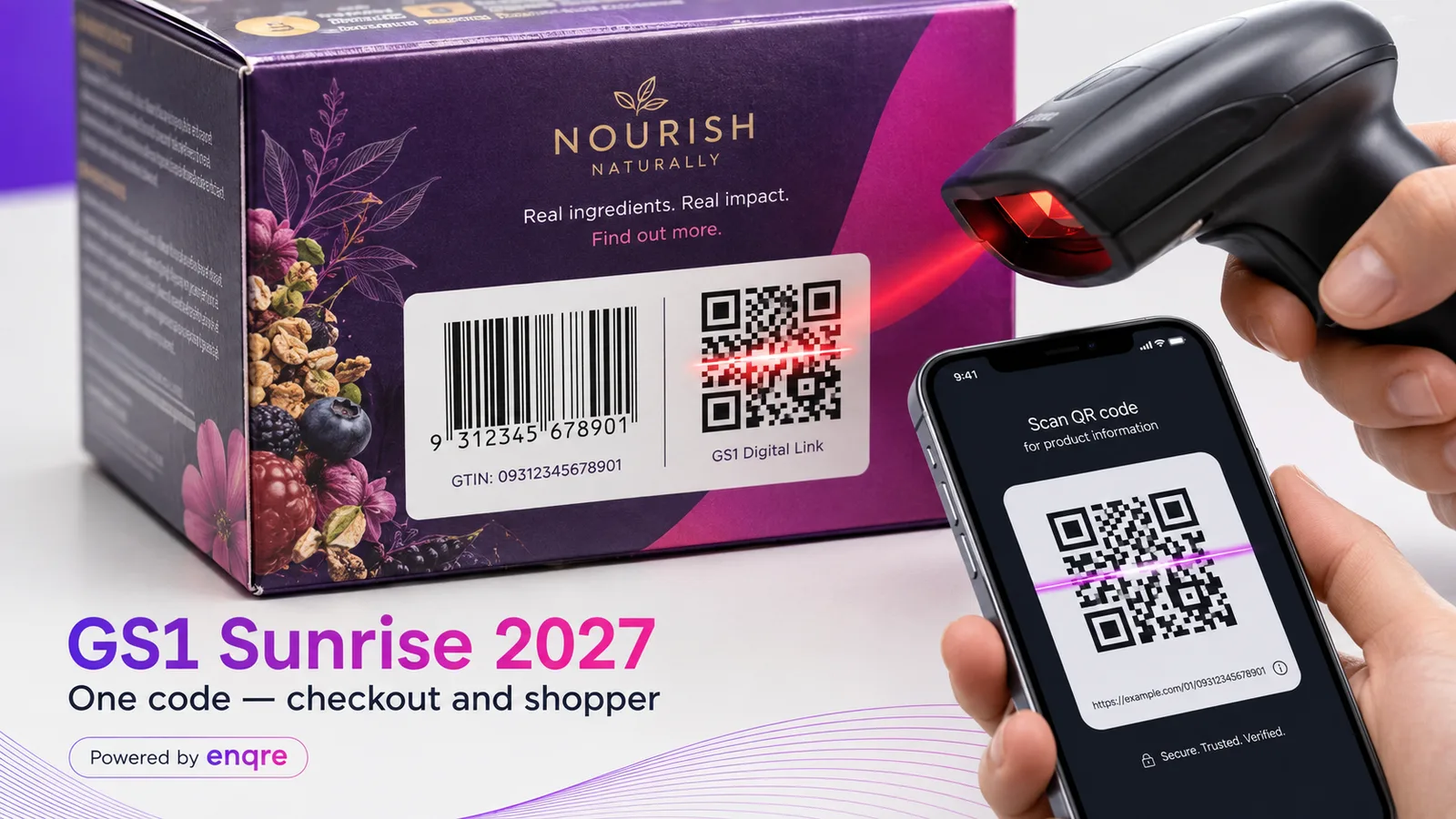
Tout tient dans GS1 Digital Link : il exprime l'identifiant du produit sous forme d'URL web ordinaire, de sorte qu'un QR code normal devient une identité produit résoluble. Un carré, lu de trois façons : un scanner de caisse lit le GTIN et enregistre la vente ; un système d'entrepôt ou de rappel lit le lot et la péremption ; le téléphone du client ouvre le lien web vers ce que la marque veut montrer. Au lieu d'un code-barres pour le commerce et d'un QR code séparé pour le marketing, le produit porte un seul code qui fait les deux.
Ce qui change en caisse — et ce qui ne change pas
La transition est additive, pas une extinction. Pendant la migration, la plupart des produits portent les deux symboles : le code-barres familier et le nouveau code 2D. Les enseignes mettent à niveau scanners et logiciels de caisse pour accepter le 2D ; tant que toutes les caisses ne le peuvent pas, le code linéaire fait tourner le passage en caisse. Les achats de personne ne se cassent à une date donnée.
Pour une marque, cela veut dire que vous pouvez ajouter un code 2D dès maintenant sans risque : il se place à côté du code-barres existant, fonctionne déjà pour les consommateurs, et sera prêt pour la caisse dès que les caisses de l'enseigne le seront.
GS1 Sunrise 2027 est-il obligatoire ? Et quel est le vrai calendrier ?
C'est le point le plus mal compris, donc soyons précis :
- C'est une initiative sectorielle, pas une loi. Aucune sanction juridique pour une marque non « prête au 2D » en 2027 — contrairement au passeport numérique de produit de l'UE, qui est une loi.
- « Fin 2027 » est l'objectif de préparation des caisses — la date à laquelle le commerce vise à pouvoir lire le 2D — pas une échéance imposée aux fabricants.
- L'adoption varie selon le marché et l'enseigne. Les grandes enseignes fixent leur propre calendrier et peuvent exiger des codes 2D avant l'objectif mondial.
La posture honnête : considérez 2027 comme l'année où l'environnement commercial est prêt pour vous, et laissez les exigences de vos plus gros clients — souvent plus précoces — fixer votre véritable échéance.
Ce que cela signifie pour vos produits : une checklist pratique
- Mettez vos GTIN en ordre auprès de GS1 — le code 2D repose sur le numéro que vous possédez déjà.
- Choisissez le symbole : un QR code GS1 Digital Link (idéal si vous voulez aussi l'engagement consommateur) ou un GS1 DataMatrix (compact, courant en frais et pharma).
- Encodez les données utiles — le GTIN seul pour commencer, en ajoutant lot et péremption là où les rappels ou la fraîcheur comptent.
- Gardez les deux codes sur l'emballage pendant la transition ; ne retirez pas encore le code linéaire.
- Pointez le lien web vers une adresse que vous contrôlez et pouvez mettre à jour — la destination derrière un code imprimé changera plusieurs fois sur la vie du produit.
- Testez la lisibilité sur l'emballage réel — petites étiquettes, surfaces courbes et films brillants se comportent autrement qu'un aperçu à l'écran.
- Demandez à vos enseignes clés leur calendrier 2D — c'est leur date, pas la date mondiale, qui vous engage.
GS1 Sunrise 2027 et le passeport numérique de produit : deux vagues, un code
Ce sont des programmes distincts qui veulent la même chose. GS1 Sunrise 2027 est une migration commerciale vers le 2D en caisse — volontaire, portée par le secteur. Le passeport numérique de produit de l'UE est une réglementation exigeant un support de données qui renvoie au dossier de conformité et de durabilité d'un produit — obligatoire, secteur par secteur.
Les deux pointent vers un QR code GS1 Digital Link sur l'emballage. Concevez bien un seul code et il sert la caisse (Sunrise), le régulateur et le recycleur (DPP) et le client (marketing) à la fois — c'est pourquoi bien faire une fois vaut mieux que coller un second symbole plus tard. Enqre prend en charge GS1 Digital Link dans l'offre Business pour ce cas, et le versant réglementaire est traité dans notre guide du passeport numérique de produit.
Idées reçues fréquentes
- « C'est une loi qui me vaudra une amende. » Non — Sunrise est un objectif sectoriel. Le passeport numérique de produit est la loi ; ne confondez pas les deux.
- « Le vieux code-barres disparaît en 2027. » Non — les deux coexistent des années ; le code linéaire n'est pas coupé à une date.
- « N'importe quel QR code convient. » Pour la caisse, il faut un code 2D conforme GS1 (Digital Link ou DataMatrix) portant le GTIN — un simple QR marketing qui ouvre un site n'est pas lisible en caisse.
- « Je dois changer mon numéro de produit. » Non — un code 2D utilise votre GTIN existant.
Questions fréquentes
GS1 Sunrise 2027 en une phrase ?
C'est l'objectif du commerce de rendre les caisses capables de lire des codes 2D (QR codes GS1 Digital Link ou GS1 DataMatrix) d'ici fin 2027, aux côtés du code-barres linéaire classique.
Est-ce obligatoire ?
Non. C'est une migration volontaire portée par le secteur, pas une loi. Des enseignes peuvent toutefois exiger des codes 2D de leurs fournisseurs selon leur propre calendrier.
Le code-barres à rayures habituel cessera-t-il de fonctionner ?
Non. Le code linéaire et le code 2D coexistent pendant toute la transition ; les caisses continuent de lire le linéaire jusqu'à leur mise à niveau vers le 2D.
Quelle différence entre un QR code GS1 Digital Link et un QR code normal ?
Un QR code normal ouvre juste une URL. Un QR code GS1 Digital Link encode le GTIN de votre produit dans cette URL, de sorte que le même carré est à la fois un identifiant commercial lisible et un lien consommateur.
Un même QR code peut-il être scanné en caisse et par un client ?
Oui — c'est tout l'intérêt. Un code GS1 Digital Link donne le GTIN à la caisse et une page web au téléphone, depuis le même symbole.
Dois-je changer le GTIN de mon produit ?
Non. Le code 2D repose sur le GTIN que vous avez déjà auprès de GS1.
QR code ou GS1 DataMatrix — que choisir ?
Choisissez un QR code GS1 Digital Link si vous voulez aussi l'engagement consommateur depuis le même code ; un GS1 DataMatrix est le choix compact en frais et pharma, où la place manque et où le scan consommateur est secondaire.
Le code 2D doit-il être statique ou dynamique ?
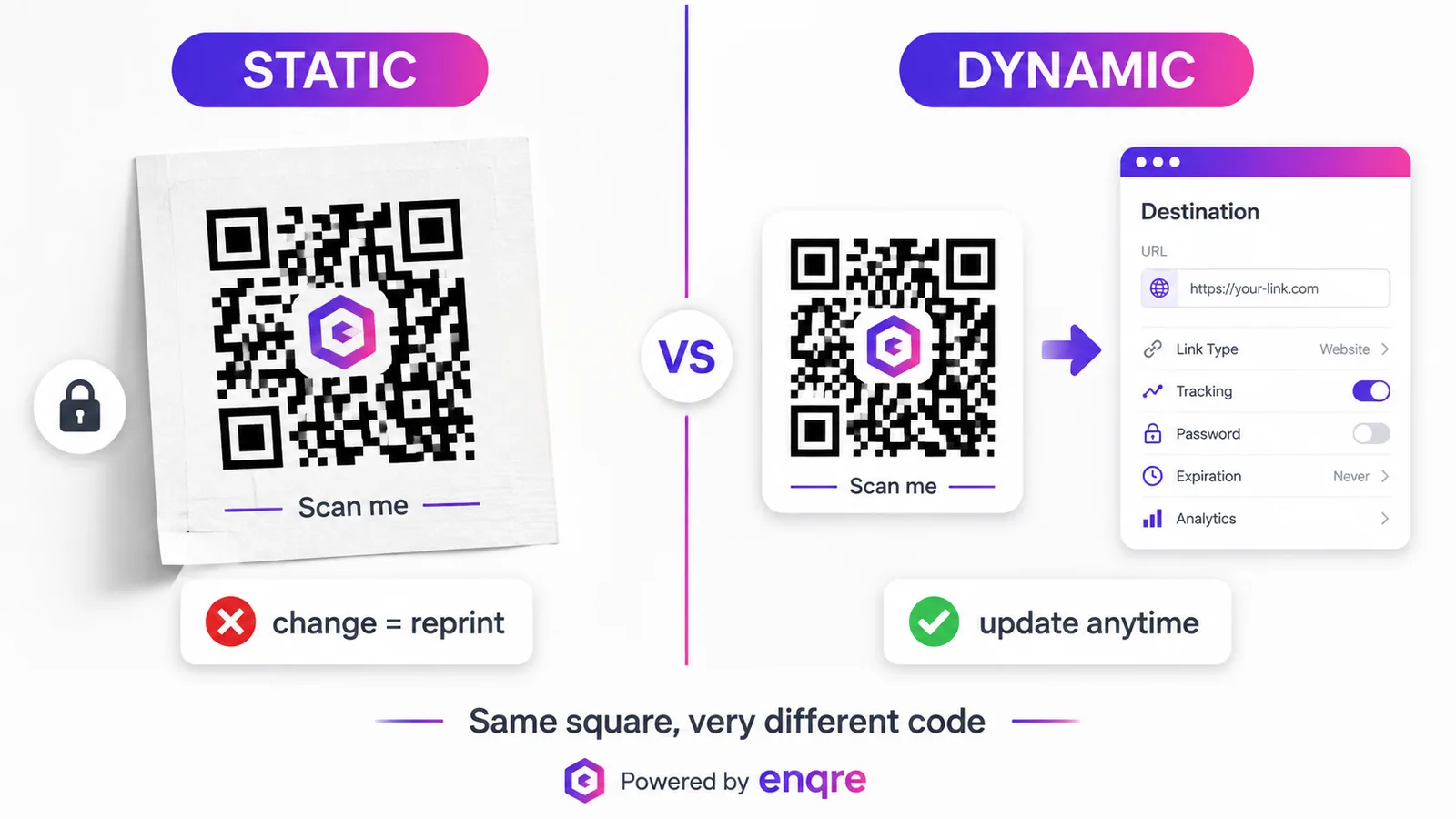
Les données commerciales qu'il porte (GTIN, lot, péremption) sont fixes par article, mais la page web liée changera sur la vie du produit. Gardez cette destination sur une adresse que vous contrôlez et pouvez rediriger, pour qu'un changement de site n'oblige jamais à réimprimer les emballages.
Quel rapport avec le passeport numérique de produit ?
Ce sont des programmes différents — Sunrise, commerce volontaire ; le DPP, loi européenne — mais tous deux sont servis par le même QR code GS1 Digital Link, si bien qu'un seul code bien conçu peut satisfaire les deux.
En résumé
GS1 Sunrise 2027 n'est pas une échéance à craindre ; c'est le moment où le QR code passe d'ajout marketing à identité principale du produit. Les marques gagnantes sont celles qui ajoutent tôt un code 2D GS1 Digital Link à côté du code-barres existant, pointant vers une destination modifiable — pour que le carré unique sur l'emballage soit prêt à la fois pour la caisse, le régulateur et le client. Créer un QR code ou voir les offres.
L’équipe Enqre·Publié le 10/08/2026