QR codes pour musées et galeries (au-delà du cartel)
Un cartel a la place pour un nom, une date et peut-être une ligne de contexte. Tout le reste qu'un visiteur pourrait vouloir — l'histoire de l'œuvre, l'artiste dans ses propres mots, un zoom sur une touche qu'on ne voit pas d'assez près, une traduction, une narration audio, une note pour un visiteur malvoyant — n'a nulle part où vivre. Un QR code est la porte de ce minuscule cartel vers tout cela, sans encombrer le mur et sans forcer personne à télécharger une appli. Bien pensé, il vous dit aussi quelles œuvres intéressent vraiment vos visiteurs, dans quelle langue, et où ils décrochent.
Partez du problème que le code résout : le cartel est trop petit
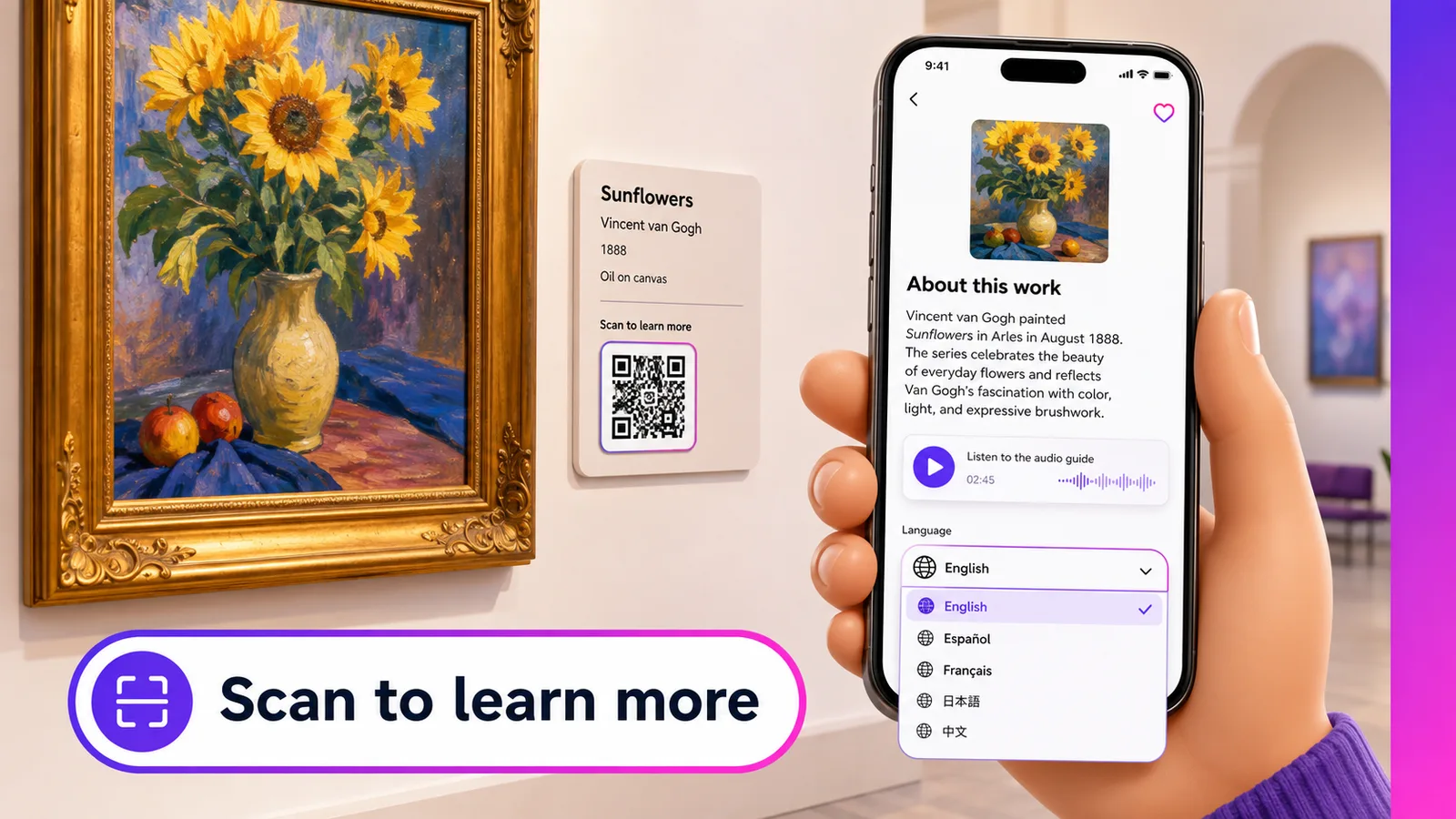
Les meilleurs QR codes de musée ne sont pas décoratifs ; ils répondent à une vraie contrainte. Le cartel doit rester court et lisible, or le commissaire a un paragraphe de provenance, le restaurateur une histoire sur la restauration, et le visiteur devant l'œuvre une question que le cartel ne peut anticiper. Un code à côté de l'œuvre ouvre un « cartel étendu » — le texte complet, des images de l'œuvre avant restauration, un court film de l'artiste au travail. Le mur reste calme ; la profondeur est à un scan pour qui la veut.
Essentiel : gardez l'essentiel sur le cartel — titre, artiste, date, technique. Le code est pour le plus, jamais pour la base. Un visiteur ne devrait jamais avoir à lever son téléphone pour savoir ce qu'il regarde.
Le super-pouvoir discret : accessibilité et langue
C'est là qu'un QR de musée gagne sa place au-delà de la nouveauté. Un code à côté d'un tableau peut ouvrir une page qui propose une narration audio pour qui trouve le petit texte fatigant, une version en image décrite pour un visiteur malvoyant, une vidéo en langue des signes pour un visiteur sourd, et une mise en page en grands caractères — sans un seul objet de plus au mur. Associez-le à nos notes sur les QR codes accessibles pour que la page d'arrivée soit elle-même facile à utiliser.
La langue, même histoire. Au lieu d'imprimer six cartels par œuvre, un code peut ouvrir une page dans la langue du visiteur — sélecteur ou détection du téléphone. Les visiteurs internationaux ont la profondeur dans leur langue, et vous apprenez quelles langues votre public a vraiment besoin, au lieu de deviner le budget de traduction.
Laissez voir ce que la vitre refuse
Derrière une vitre, au-delà d'un cordon, ou simplement trop haut au mur, le détail le plus fin est souvent la part qu'un visiteur ne peut atteindre. Un code qui ouvre une image haute résolution zoomable leur laisse explorer la touche, la marque du fabricant, la minuscule signature — ce qui transforme un coup d'œil en souvenir. Pour un manuscrit ou une pièce, c'est la différence entre « un petit objet en vitrine » et une page qu'on peut vraiment lire.
Faites de la visite un parcours — et un jeu pour les enfants
Une suite numérotée de codes peut former un parcours dans la collection, chacun menant au suivant et ajoutant une couche d'histoire en chemin. Pour les familles, le même mécanisme devient une chasse au trésor : trouver l'œuvre, scanner le code, récolter l'indice. Cela tient les enfants et garde les familles plus longtemps, et donne aux primo-visiteurs une colonne vertébrale pour une collection parfois écrasante. Ajoutez un code comment nous trouver sur les affiches et un code plan à l'entrée, et le voyage commence avant la porte.
La sortie, c'est là que les musées financent la prochaine expo
L'attention culmine à la fin d'une bonne visite — le moment idéal pour demander. Un code à la sortie, ou près d'une œuvre qui a touché, peut ouvrir une page de don, une adhésion, ou le tirage en boutique. Musées et galeries vivent exactement de ça, et un code rend la demande sans effort et suivable — voyez notre guide pour les associations et les dons. Un code « qu'en avez-vous pensé ? » mène à un court sondage tant que la visite est fraîche.
Pourquoi un code de galerie devrait presque toujours être dynamique
Les expos tournent ; les panneaux muraux se réutilisent ; les textes se corrigent et s'enrichissent ; le même socle porte un autre objet la saison suivante. Un code dynamique est fait pour ça : le carré imprimé ou gravé reste, et vous le redirigez vers la prochaine expo, le cartel corrigé, la nouvelle traduction — sans toucher au mur. Il vous donne aussi un compte de scans par œuvre, et cette donnée révèle discrètement beaucoup : les pièces que les visiteurs scannent vraiment sont les vraies vedettes de la collection — souvent pas celles supposées par le commissaire. Lisez-le dans vos statistiques de scan et laissez-le façonner l'accrochage, la visite guidée et la boutique.
Une carte d'emplacements rapide
- À côté de l'œuvre : cartel étendu, audio, versions accessibles, image zoomable.
- Entrée : un plan et le parcours de visite.
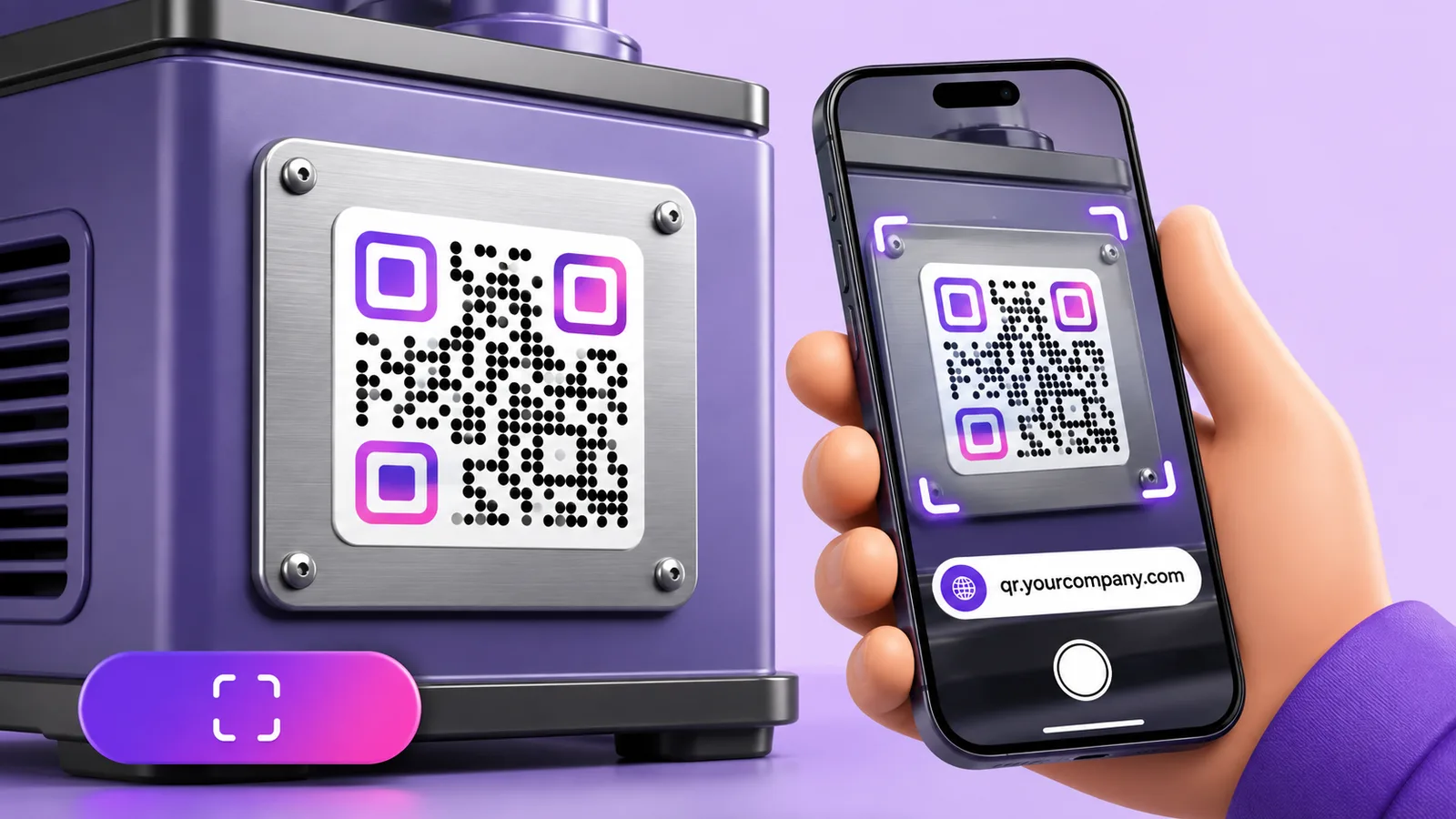
- Socles et sculpture : un code petit et durable — attention à la surface, voir codes sur métal, bois et tissu.
- Sortie : faire un don, adhérer, retour d'avis.
- Boutique : le tirage, le catalogue en PDF, les autres œuvres de l'artiste.
- Affiches et annuaires : accès, horaires et l'expo en cours — redirigés chaque saison.
Les détails qui font tout
Faut-il une appli aux visiteurs ?
Non — et il ne le faut pas. Tout téléphone moderne lit un QR depuis l'appareil photo. Exiger une appli est le moyen le plus rapide de faire abandonner ; une simple page web ouverte d'un geste est tout l'intérêt.
Les codes ne ruinent-ils pas l'esthétique ?
Gardez-les petits, cohérents et discrets — un seul style maison, juste sous le cartel, pas plaqué sur l'œuvre. Dans une galerie, la retenue se lit comme du soin. Si un coin sombre en rend un difficile, notre note sur les codes qui ne scannent pas et le guide de taille d'impression couvrent les remèdes : plus de contraste, un peu plus grand, une marge autour.
Et s'il n'y a ni réseau ni Wi-Fi dans la galerie ?
Gardez les pages d'arrivée légères — texte et images compressées chargent sur une connexion faible — et offrez du Wi-Fi visiteurs où vous pouvez. La vidéo lourde est la seule chose qu'une zone morte punit, hébergez-la donc pour qu'elle se dégrade en douceur.
Un seul code peut-il servir toutes les langues ?
Oui. Pointez-le vers une page à sélecteur de langue ou détection automatique, ainsi un seul code près de l'œuvre atteint chaque visiteur. Vous apprenez aussi quelles langues sont les plus demandées — de vraies données pour le prochain budget de traduction.
Puis-je réutiliser le code pour la prochaine expo ?
Seulement s'il est dynamique. Un code statique verrouille le lien sur une expo ; un code dynamique garde le même carré au mur et permet de le rediriger à chaque changement.
Faites un code de musée que vous pouvez rediriger chaque saison et mesurer par œuvre — créez un QR code dynamique gratuitement, sans carte.
L’équipe Enqre·Publié le 12/08/2026